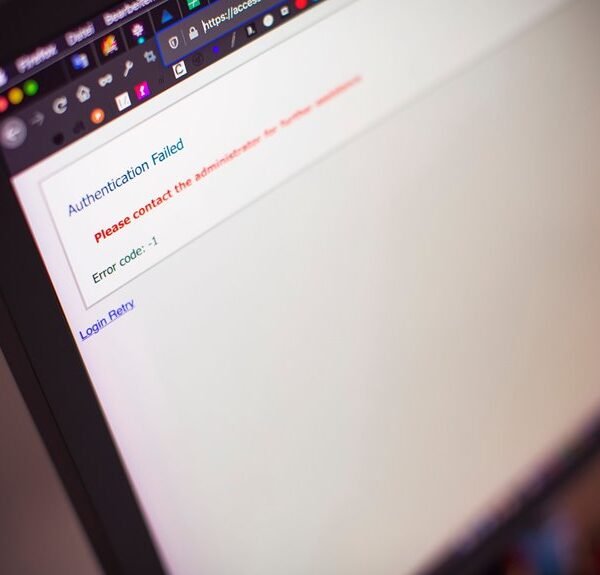
A disciplined approach to 912-331-4029 errors starts with identifying the source through data governance and lineage. The process moves to normalize and validate number formatting to ensure consistent digits and separators. Next, audit data flow and input controls to verify validation, routing accuracy, and timely logs. Finally, implement root-cause troubleshooting and prevention, establishing defined statements and continuous improvement. The path reveals where failures recur, inviting deeper investigation beyond surface symptoms.
Identify the Source of 912-331-4029 Errors
Identifying the source of recurring errors tied to 912-331-4029 requires a structured diagnostic approach. Data governance guides data lineage, collection, and accountability, enabling precise tracing of fault origins. The method emphasizes error interception, isolating failure modes before escalation. Observed patterns inform targeted remedies, reducing variance. A disciplined, data-driven workflow supports transparent decision-making and freedom to optimize system reliability without overreach.
Normalize and Validate Number Formatting
Normalization and validation of number formatting are established as foundational steps to reduce false positives and misrouting of calls associated with 912-331-4029.
The process enforces consistent input forms, enabling reliable routing decisions. Normalize validation ensures uniform digits, separators, and extensions, while formatting normalization reduces ambiguity.
Structured checks detect anomalies, guiding corrective actions without ambiguity or delay for users seeking freedom and efficiency.
Audit Data Flow and Input Controls
Auditing the data flow and input controls involves mapping how 912-331-4029 data moves from entry points through processing stages to routing outcomes, then evaluating control points for accuracy, completeness, and timeliness.
The process emphasizes data validation and error logging, confirming that validation rules are enforced, anomalies are captured, and logs enable traceability without extraneous detail or unnecessary repetition.
Implement Root-Cause Troubleshooting and Prevention
To implement root-cause troubleshooting and prevention, the approach begins with structured problem definition, data collection, and hypothesis testing to isolate the underlying failure mechanisms behind recurrent errors on 912-331-4029.
Identify root cause through systematic analysis, implement Prevention strategies, Normalize formatting for consistency, and enforce Data validation to reduce variability and sustain reliable operation without sacrificing organizational freedom.
Frequently Asked Questions
How Can I Verify if the Number Is Spoofed or Fraudulent?
The answer: Verify spoofing by checking call metadata and source headers; Validate fraudulence through cross-referencing numbers with reputable databases; Monitor reliability of caller-ID data; Test resilience by simulating attempts to spoof and auditing results.
What Are Common Edge Cases Causing Intermittent 912-331-4029 Errors?
Intermittent 912-331-4029 errors arise from edge case handling and network variability. The system emphasizes retry logic, backoff, and idempotent calls to mitigate sporadic failures, while monitoring for rate limits, DNS glitches, and carrier routing anomalies.
Which Users or Roles Should Monitor Repeated Error Alerts?
Users responsibilities and Roles ownership designate monitoring to incident responders, systems owners, and service owners; audits, alert triage, and escalation paths ensure accountability, with data-driven reviews guiding frequency, thresholds, and cross-team communication for sustained error visibility and resolution.
How to Test Error Handling Under Peak Traffic Conditions?
Testing under load reveals how errors behave under peak traffic; the approach uses fault injection to provoke failure modes, measures latency, error rates, and recovery times, and documents thresholds, enabling data-driven optimization while preserving system freedom.
What External Dependencies Influence 912-331-4029 Reliability?
A tethered kite illustrates how external dependencies shape outcomes; reliability factors include spoofing verification, fraud detection, intermittent errors, edge cases, monitoring roles, alert ownership, peak traffic testing, and load scenarios as central influences.
Conclusion
Conclusion (75 words):
In sum, a disciplined, data-driven approach reveals recurrent 912-331-4029 errors by mapping fault origins through governance and lineage, then enforcing consistent formatting and rigorous validation. Systematic auditing of data flow and input controls confirms routing accuracy and timely logs, while root-cause analysis isolates recurring failure mechanisms. As the adage goes, “measure twice, cut once.” Emphasizing normalization, validation, and transparent remediation drives sustained reliability and continuous improvement, preventing recurrence and maintaining dependable communication pathways.